The Third Dimension, Simply 3D
You have undoubtedly watched a 3D movie in the cinema or even on TV. Most people immediately think of movies when they hear 3D. In that process, projection tricks are performed to create the illusion of depth from flat 2D images. By the third dimension or simply 3D, we mean the real-world coordinates in actual three-dimensional space.
When we examine the third dimension mathematically, we find that these coordinates are represented as points on the X, Y, and Z axes, also known as Cartesian coordinates.

What Is the Difference Between 2D and 3D?
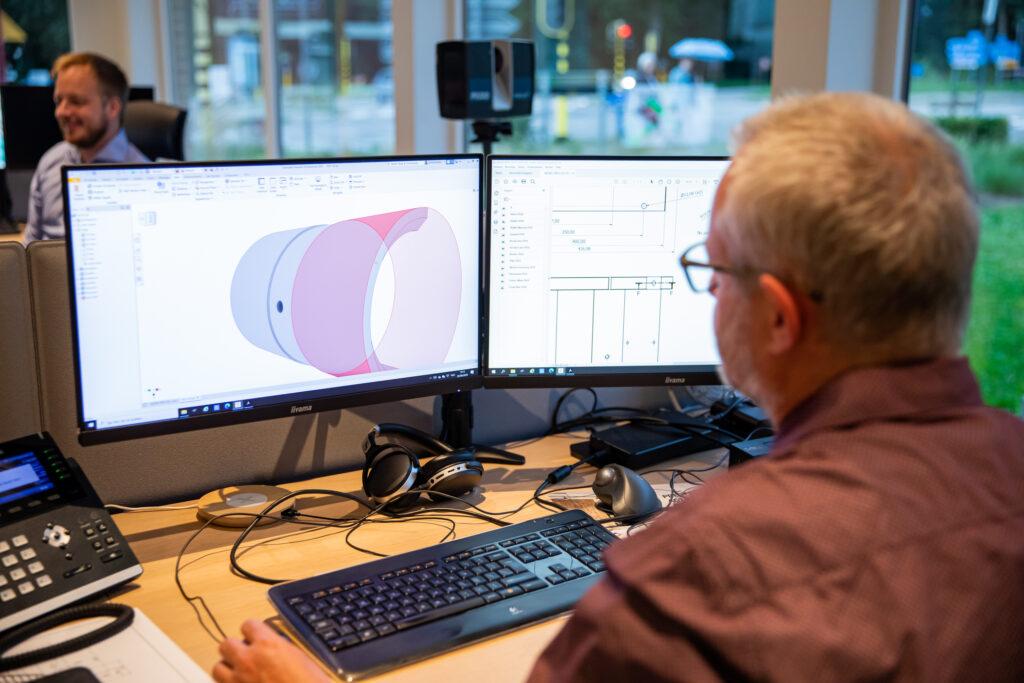
The main difference between 2D and 3D systems is how they interpret and reproduce data in real space. To clarify further, it can be said that 2D systems create digital images, while 3D systems create digital sculptures.
3D Scanning – How Does It Work?
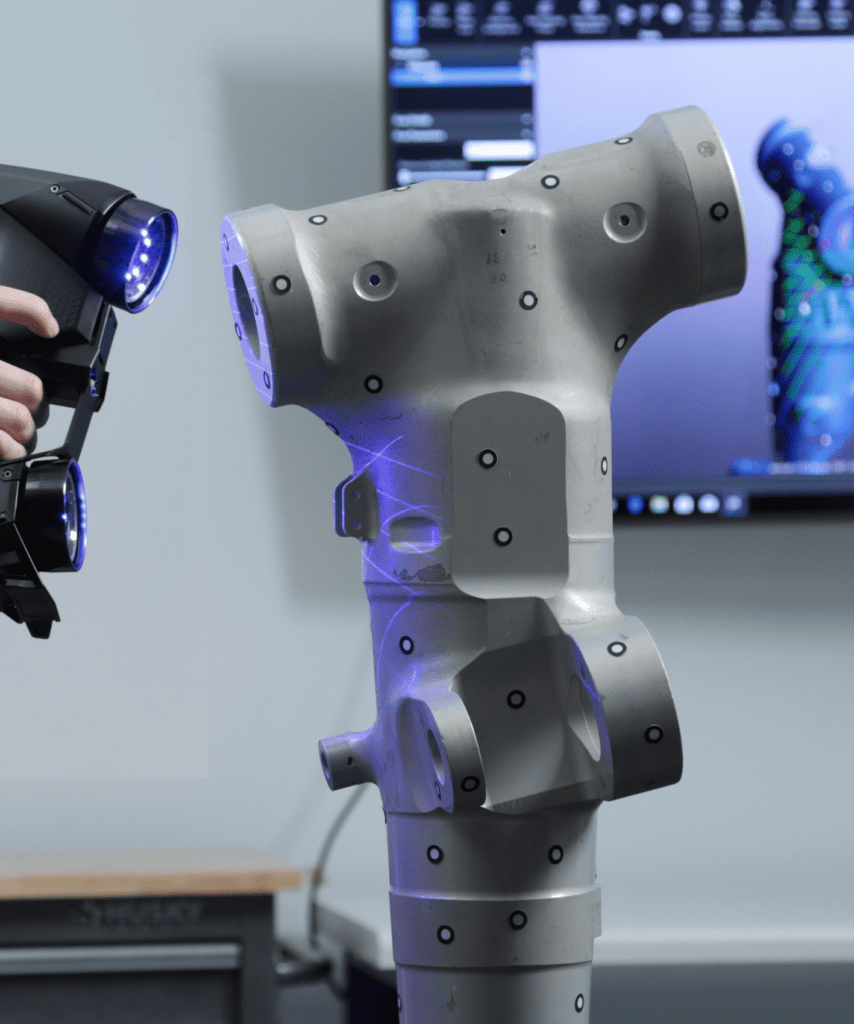
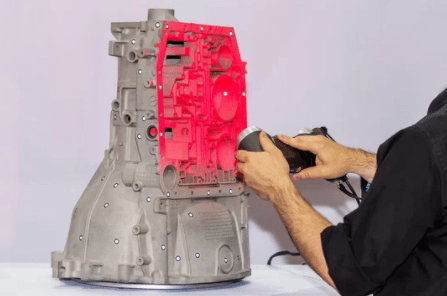
Using the triangulation method, 3D scanning is a process that determines the shape of an object’s surface or its volume in a three-dimensional space. By collecting information about the real-world object using a 3D scanning device, this enables 3D measurement and 3D visualization.
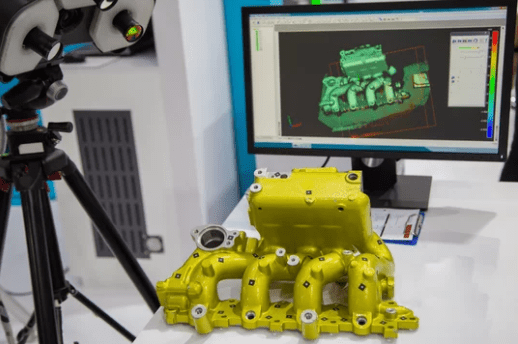
Accurate 3D measurements derived from a scanned object are useful for material inspection and quality control. If a 3D scanning technology can gather substantial 3D data from the scanned object, it can simulate an accurate, high-resolution digital 3D model of the object in the real world. This is better known as 3D visualization.
State-of-the-Art Technology
NESKO Engineering employs 3D scanning for:
Extracting pure CAD data from molds
Scanning for creating P&IDs
As-built dossiers
Scanning production lines
…
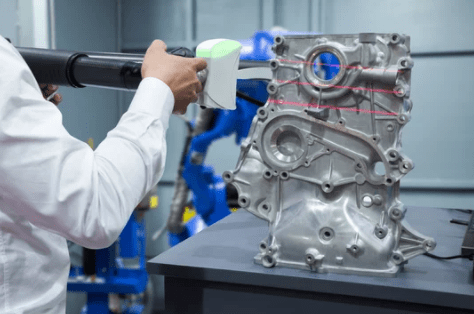
Of course, we use a different type of scanner for mapping a production hall than for scanning an aircraft wing. For each problem, we use the most advanced state-of-the-art 3D scanner, allowing us to deliver an absolutely accurate 3D CAD model.
Do you have further questions about 3D scanning after reading the above article?
Schedule an Appointment